
Range
When considering an electric car, it’s important to understand the concept of range, which means how far a vehicle can travel on a single charge.
Understanding range, and the factors that affect it, will give you real confidence and peace of mind in making the switch to electric!
In this section, we’ll explore:

The different measurements of range: ‘WLTP’, ‘Real-World Range’ and ‘Estimated Range’.

The factors that affect range.

The degree to which range is affected, with the Range Calculator tool.

How to easily maximise your range with in-car technology.

How much range is enough?
WLTP vs Real-World vs Estimated Range
WLTP
WLTP stands for ‘Worldwide Harmonised Light Vehicle Test Procedure’. It is a global, standardised test used by all car manufacturers, that measures EV range under controlled test conditions. Whilst the WLTP range is not always achievable in real life, it is a useful benchmark to easily compare the range of different makes and models.
Below are the WLTP certified test results for the bZ4X:

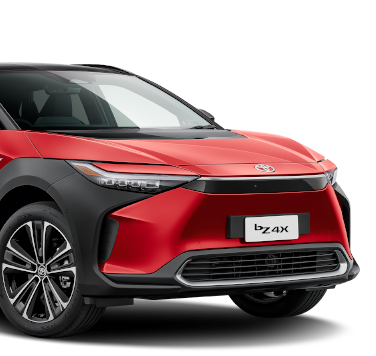
bZ4X
Grade
Pure FWD
Motion FWD
Motion AWD
Vision FWD
Vision AWD
‘WLTP’
Range
318 miles
312 miles
286 miles
277 miles
259 miles
‘Real-World’ Range
‘Real-World’ Range is the actual range achieved. This depends on various factors, such as driver behaviour, weather, temperature, road conditions and vehicle grade/spec. As these factors vary by circumstance (driver, road, weather, etc), the ‘Real-World’ Range achieved varies also. All EVs are affected by these factors, and petrol/diesel cars are also affected in a similar way.
Let’s look at these factors in more detail:
HVAC - Heating, Ventilation & Air-Conditioning usage
Using the heating or air conditioning in an EV takes power from the battery. The more energy-intensive the HVAC usage, the quicker the battery will drain.
Driver behaviour/acceleration input
Driving style is one of the biggest factors impacting real-world range. Accelerating quickly and driving at higher speeds uses more energy and reduces efficiency – just like it does with a petrol/diesel car.
Road type (motorway, city, suburban)
When it comes to efficiency and road type, EVs work in the opposite way to a petrol/diesel car. Driving in city or suburban areas is best for an EV, as this maximises the benefit of regenerative braking. Driving on a motorway at a constant high speed is less efficient.
Weather/outside temperature
Just like combustion engines, batteries are most efficient when they are warm (around 20 degrees). In colder weather, EVs use power from the battery to generate heat, warming the battery to the ideal operating temperature. The HVAC system is also likely to be used more in cold weather, resulting in a further reduction in range compared to milder temperatures. In warm weather, the range can be maximised.
Tyre pressures
Using the right tyre pressures is important for any vehicle and EVs are no different. Low pressures increase rolling resistance, resulting in poor efficiency and reduced range.
Vehicle load
Carrying heavy loads, or leaving unnecessary weight in the car (like a roof rack) will increase energy consumption and decrease range.
Grade and options
The higher the grade or spec of a vehicle, generally speaking, the heavier it will be due to increased equipment levels. The additional weight leads to reduced efficiency and a lower range.
Larger alloy wheels will also reduce range. As wheels spin, they create turbulence which makes the car less aerodynamic. The larger the wheels, the bigger the impact on range.
All-Wheel Drive models typically have a slightly lower range compared to front-wheel drive (FWD), due to the additional motor and weight of the AWD system components.
Click here to see how these options impact range using our Range Calculator tool.

Estimated Range
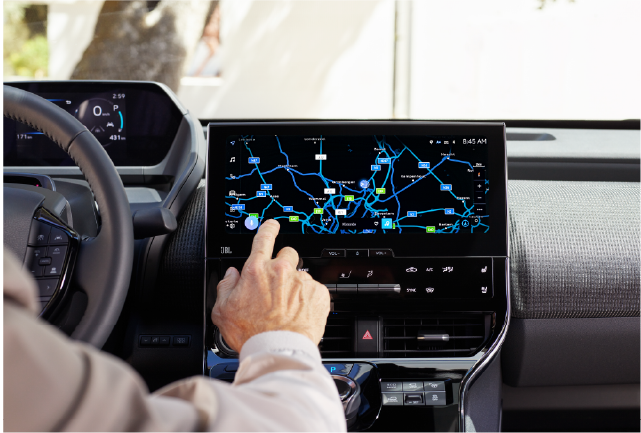
Estimated or ‘indicated’ range is displayed on the driver’s display. This figure is simply an estimation based on recent driving patterns and current conditions.
It is calculated using:

Previous energy consumption/driving style, over the last 10 journeys.

Current driving conditions (eg. outside temperature) and the efficiency being achieved.

HVAC usage (if it were to continue in the current way, until the battery is empty).
The bZ4X recalculates this frequently and it is possible for this figure to increase, as well as decrease during a journey. This is particularly true if driving in a city, where you can maximise regenerative braking.
Range calculator
The Range Calculator tool shows the degree to which various factors can affect range.
By changing the parameters, you’ll see just how temperature changes, road type/driving style and even alloy wheel choice, have an impact on range.
How to maximise range
It’s easy to maximise range, using the bZ4X’s excellent technology:
Energy-Saving Heat Pump
An extremely efficient type of heater that warms the battery and heats the cabin while minimising energy consumption. Standard equipment for all bZ4X models (£1000+ option with almost all other brands).
Eco Mode
Reduces accelerator response for better efficiency.
Regeneration Boost
Regenerative braking captures energy lost during deceleration and uses it to recharge the battery whilst also minimising brake wear.
Auto/Eco HVAC mode
Efficiently focuses heat on passengers rather than heating the entire cabin.
Cruise Control
Maintaining a constant speed (eg. on motorways) helps to maximise range.
EV Coaching via MyToyota App
The ‘EV coaching’ feature suggests how drivers can best adapt their driving style to achieve the maximum range possible.
Pre-Conditioning via MyToyota App
Setting the interior temperature in advance whilst still plugged in reduces the need for HVAC usage while driving, effectively extending range. It’s also a very popular comfort feature!
How much range do you need?
Range ‘anxiety’ is much publicised by the media and leads many customers to question whether an EV is the right choice.
It’s important to consider your actual daily mileage and occasional longer journey needs. When thinking about this practically, together with the charging options available, many people are surprised at just how well an EV fits their lifestyle.
Did you know?
Statistically, in the UK:
- The average commute in the UK is 19.5 miles.
- The first car in a family averages just 37 miles a day and any second car covers around 11 miles daily.
- 99% of journeys in the UK are under 100 miles.
With a thorough understanding of range and mileage needs, it is easy to see how well an EV can work for you, and how you can enjoy the benefits of owning an EV (such as convenience of charging overnight and low running costs).